

Imagine working in a warehouse where employees repeatedly slip on the same section of flooring. Management knows about it, workers have complained, and someone has already suffered a serious injury.
Under Australian workplace safety laws, employers are expected to investigate and manage foreseeable risks, not simply rely on an industry safety certificate.
A business found to be in breach of safety obligations could face a WorkSafe improvement notice requiring the hazard to be fixed. A serious breach could lead to prosecution, with companies in Victoria facing fines of up to $1.88 million.
So why shouldn’t the NBL face the same scrutiny?
A history of player safety complaints
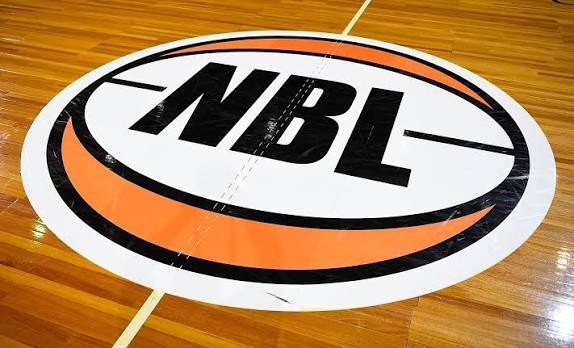
During the 2026-27 NBL season, incidents involving Cole Anthony, Luke Paul and Xavier Cooks have again raised concerns about slippery court decals.
In 2021, Sydney Kings guard Didi Louzada publicly criticised the league after repeatedly slipping against Melbourne United.
“This league is kidding me,” Louzada wrote, adding that he was “tired of being silent.”
Former NBL MVP Andrew Bogut also demanded action, while the Australian Basketball Players’ Association reportedly raised the issue three separate times that season.
But the NBL’s response to public criticism raised another serious concern.
In March 2021, ESPN reported obtaining an internal NBL memo that went beyond reminding clubs of existing disciplinary rules. It explicitly warned that further public criticism about slippery decals could result in penalties.
The warning wasn’t limited to players. The NBL confirmed that its disciplinary rules extended to owners, staff, coaches and officials whose public comments were considered to bring the competition into disrepute.
The league also insisted that discussions about the decal problem and potential alternatives be conducted privately and professionally, rather than through public criticism.
Bogut questioned the league’s approach, sarcastically declaring:
“If we don’t talk about it, it didn’t happen.”
The NBL defended its existing disciplinary rules, while ESPN reported that no fines had been issued at the time.
Would this be acceptable in any other Australian workplace?
Under Australian occupational health and safety legislation, employers and other relevant duty holders are generally required to eliminate risks to health and safety so far as reasonably practicable.
Where elimination is not reasonably practicable, they must reduce those risks as far as reasonably practicable.
There are also consequences for employers who punish workers for raising safety concerns. Under section 76 of Victoria’s Occupational Health and Safety Act 2004, an employer can face prosecution for threatening, dismissing or disadvantaging an employee because they raised an OH&S concern through protected channels, including with their employer or a safety regulator. A company convicted of this offence can face fines of up to $522,750 under current Victorian penalty rates, while courts can also order compensation or reinstatement.
Now consider those requirements in the context of the NBL.
Players have repeatedly reported slipping on court decals, yet the problem continues. Whatever measures the league has introduced, they haven’t eliminated these incidents.
In a typical Australian workplace, repeated slipping incidents would trigger an investigation, assessment of the risks and consideration of appropriate safety measures.
Crucially, a product meeting an industry standard doesn’t automatically mean a workplace is safe.
WorkSafe Victoria’s guidance recognises that flooring can satisfy slip-resistance standards yet still present hazards under actual working conditions.
The NBL stated in February 2021 that independent testing found its decals complied with FIBA standards.
But FIBA’s own rules raise an important point.
Section 10.6 of FIBA’s 2026 Official Basketball Rules: Basketball Equipment requires stickers applied to the court without an additional finishing coat to meet the same slip-performance and gloss criteria as the ordinary playing surface.
In other words, there are specific performance requirements for the decals themselves, not merely a general product approval.
Basketball involves explosive changes of direction, sudden stops and jumping, often on surfaces affected by sweat or moisture.
The more important question is whether the decals provide adequate traction during actual games, not simply whether they pass a standardised test.
Australian workplace safety obligations also require consideration of reasonably practicable solutions, taking into account the likelihood and severity of injury, available safety measures and their costs.
Commercial expense alone isn’t an automatic justification for leaving a foreseeable risk unaddressed.
The solutions already exist. What’s stopping the NBL?
According to Fox Sports Australia’s investigation, the NBL uses Australian company Out There Media Pty Ltd as its court decal supplier.
FIBA’s official approved equipment catalogue lists three products under Out There Media:
- Avery 3002 Print Film
- Avery 3302 Print Film
- Avery DOL2460 Over Laminate
All three have Level 1 approval and are classified as high-gloss products, with gloss readings above 45%.
That classification does not automatically mean they are slippery, and the catalogue does not establish which specific products are installed at each NBL venue.
However, the distinction becomes interesting when examining the alternatives available.
FIBA’s approved catalogue also includes products from De Printshop, Oiko Service, PLAYTUAL, Praters Incorporated, Wasserman Live and ZADRGA, among others.
Several of these manufacturers offer approved matte products, while Oiko Service specifically lists an anti-slip court sticker.
Former NBL general manager Chuck Harmison told Aussie Hoopla that in previous seasons a contractor applied a non-slip coating to court decals which, to the best of his recollection, resolved the problem, although the league no longer uses that contractor.
If a non-slip coating reportedly worked in previous seasons and multiple FIBA-approved alternatives are available, has the NBL conducted comparative trials to determine whether other products or coatings offer better traction?
The NBL has previously cited independent testing of its existing decals, but no publicly available results or side-by-side trials against these competing approved products have been seen.
In 2025, NBA commissioner Adam Silver explained that the league had abandoned physical Finals decals about a decade earlier because players complained they were slippery. The NBA increasingly adopted virtual advertising and returned to painted Finals logos in 2026.
The NBL faces challenges with shared venues where permanent paint may be impractical. In 2021, NBL owner Larry Kestelman also argued that virtual signage was financially unviable:
“The economics of virtual signage have been closely explored but are not viable.”
But other options include alternative coatings, different decal materials, smaller advertising areas and digitally inserted broadcast graphics.
With these alternatives available, why hasn’t the NBL found an effective solution after so many years of complaints?
Even sponsors wanted the decals removed
In March 2021, Sydney Kings sponsor Brydens Lawyers requested the removal of its court decals over injury concerns, and the Kings agreed. Principal Lee Hagipantelis explained:
“I cannot, in good conscience, permit my firm to be engaged in any activity where a risk of foreseeable injury has been identified.”
While the NBL argued that physical court advertising provided essential sponsorship revenue, one of its own clubs’ major sponsors wanted its branding removed because of safety concerns.
Yet even as slipping concerns continued in 2026, the league announced a new advertising partnership with Liberty Financial that would see additional decals appear along the three-point line at every regular-season game through to the Finals.
The partnership demonstrates that the league remains committed to physical court advertising while investigating alternatives.
If a sponsor was prepared to remove its own advertising over safety concerns, shouldn’t that have prompted a broader rethink of the entire approach?
How many warnings are enough?
The NBL’s players have repeatedly complained, their association has called for action, and a major sponsor has requested the removal of its advertising.
An experienced former NBL administrator recalls a treatment that appeared to work. FIBA lists multiple approved alternative products, while the NBA has demonstrated that physical advertising decals are not essential to a successful basketball competition.
Yet players are still slipping.
The league should be able to demonstrate why its existing products remain appropriate, whether alternative suppliers have been independently evaluated and what additional measures are being considered.
If repeated slipping incidents would demand prompt action in any other Australian workplace, why are professional basketball players still waiting for an effective solution?
Sources and further reading
Workplace safety: WorkSafe Victoria: Employer duties, WorkSafe Victoria: Discrimination against employees raising safety issues, WorkSafe Victoria: OHS Act offences and penalties, Victorian Government: 2026–27 penalty unit value, WorkSafe inspectors and enforcement, Preventing slips, trips and falls and Safe design and slip resistance.
Decal suppliers and equipment: Fox Sports: NBL court decal suppliers and safety concerns (2026), FIBA: Official approved court stickers catalogue and FIBA: Official Basketball Rules 2026, Basketball Equipment, Section 10.6.
NBL reporting: ESPN: NBL issue decal warning (2021), NBL: Official court maintenance statement (2021), Brydens Lawyers requests decal removal and NBL: Liberty Financial partnership (7 October 2026).
Other sources: NBA Commissioner Adam Silver on slippery Finals decals, NBA return to painted Finals logos (2026) and comments provided directly to Aussie Hoopla by former NBL general manager Chuck Harmison, November 2026.